
Biomolecular Transport
Uncovering the physical mechanisms governing transport across vascular, cellular, and tissue barriers.
A primary focus of our laboratory is understanding and controlling drug transport across the cellular, vascular, and interstitial barriers that limit therapeutic efficacy in brain cancer and neurological disorders. We investigate how ultrasound-mediated mechanical and thermal stresses modulate transport across these barriers.
Mechanical Stress: Focusing on the microscale forces generated by acoustically driven microbubbles (MBs), our work demonstrated that MB-enhanced focused ultrasound (MB-FUS) increases transvascular transport and interstitial fluid flow in the brain tumor microenvironment, challenging the prevailing view that transport in brain tumors is dominated primarily by diffusion (PNAS 2018).
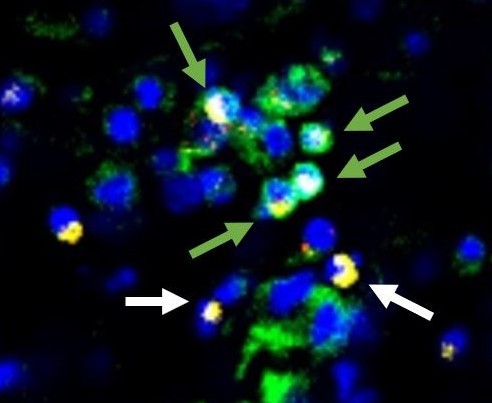
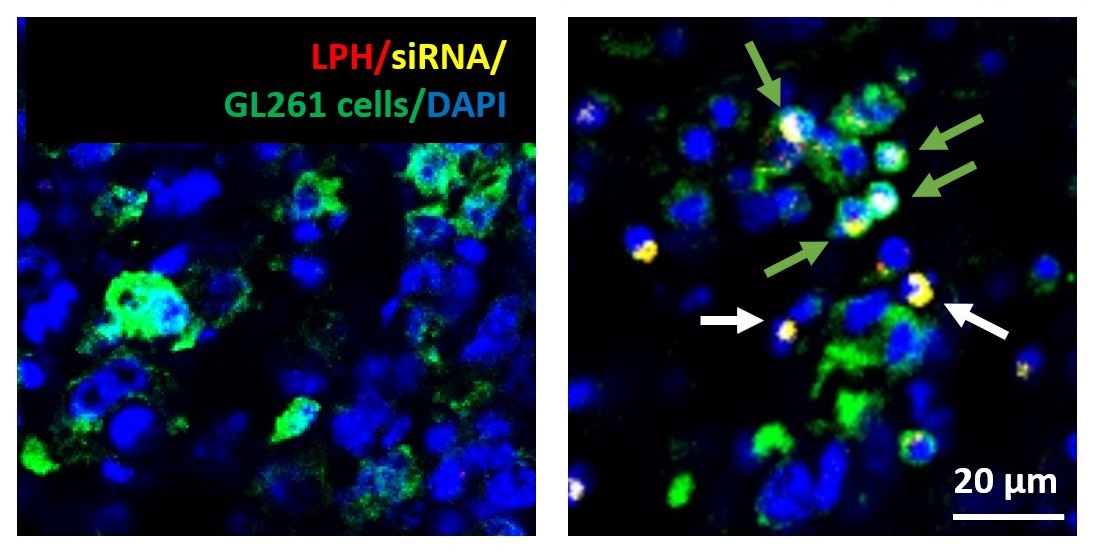
Building on these observations, we demonstrated that combining MB-FUS with siRNA-loaded cationic nanoparticles, where increased interstitial fluid flow is critical for improved brain penetration, led to markedly reduced expression of the targeted gene (Science Advances 2021; NIH Research Highlight). Ultimately, our research laid the groundwork for identifying optimal nanoparticle properties, such as size and surface charge, combining physical acoustic forces with nanotechnology for the effective delivery of nucleic acids to brain tumors.
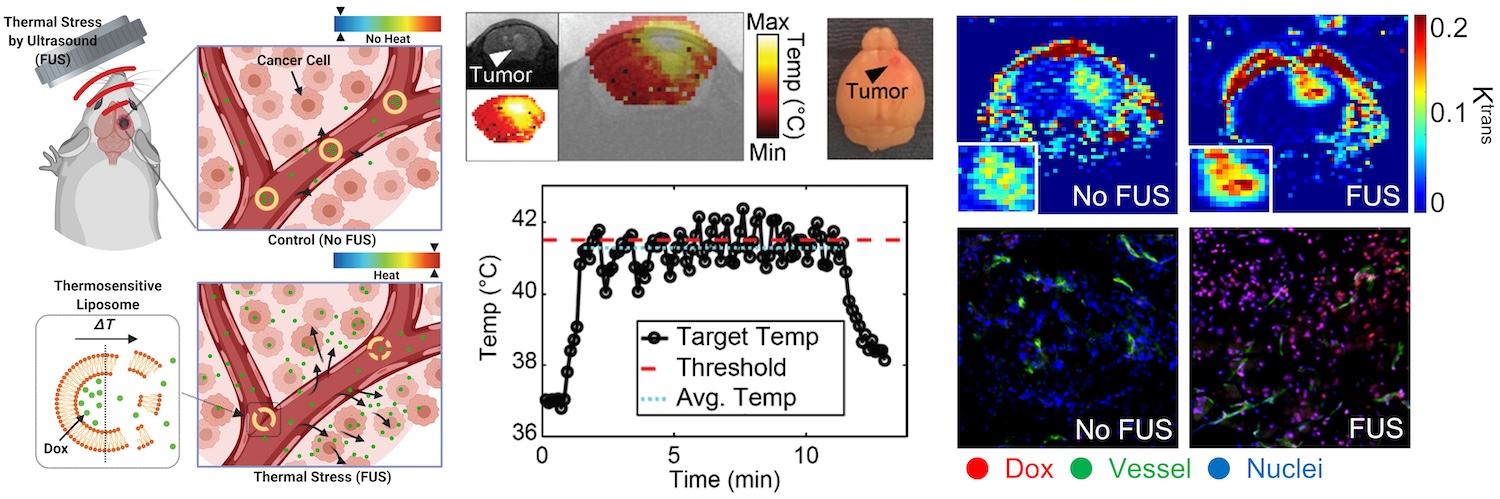
Thermal Stress: To understand the impact of mild hyperthermia in the central nervous system, we established safety thresholds and exposure conditions for localized trans-skull heating. Our studies showed that moderate thermal stress promotes transient changes in vascular transport dynamics within the tumor microenvironment, enabling spatially controlled heating to trigger targeted drug release and enhance chemotherapy delivery from thermosensitive carriers.
By establishing fundamental principles linking ultrasound-mediated mechanical and thermal stresses to vascular and interstitial transport, our lab provides a framework for delivering small molecules, nucleic acids, and targeted nanoparticles across biological barriers (Nature Reviews Cancer).